
NoDa's crash risk is driven by its identity as Charlotte's arts and entertainment district — a compact grid that regularly absorbs festival crowds, gallery-crawl foot traffic, and light rail ridership on streets shared with steady vehicle traffic.
North Tryon Street, which forms NoDa's eastern edge and connects toward University City, is identified in City of Charlotte Vision Zero enforcement materials as a corridor requiring targeted safety attention between West Sugar Creek Road and University City Boulevard.
NoDa's regular festivals, gallery crawls, and live-music events bring large pedestrian crowds into the neighborhood's compact commercial core along North Davidson Street, increasing pedestrian-vehicle interaction well beyond typical neighborhood levels on event nights.
CMPD handles crash response throughout NoDa, and the Lynx Blue Line light rail — which runs through the neighborhood with a dedicated NoDa station — adds pedestrian rail-crossing considerations to standard vehicle crash investigations in the area.
Novant Health Presbyterian Medical Center on Hawthorne Lane is the nearest full-service emergency department to NoDa, with Atrium Health Carolinas Medical Center's Level I trauma center available for the most serious injuries.
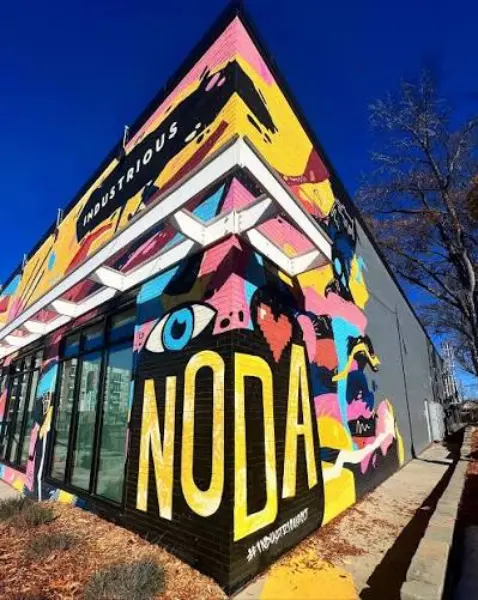
Car accidents are a serious issue in NoDa because Charlotte's arts district draws heavy festival, gallery, and nightlife foot traffic into a compact street grid that also carries light rail service and steady vehicle traffic along North Davidson Street and North Tryon Street.
NoDa — short for North Davidson — built its identity on murals, galleries, live music venues, and a walkable commercial core, and that identity is precisely what elevates its crash risk. Regular gallery crawls, festivals, and weekend nightlife bring large pedestrian crowds into a compact street grid that was not designed for event-level foot traffic, and those crowds share the road with regular vehicle traffic and Lynx Blue Line light rail service running directly through the neighborhood.
North Tryon Street forms NoDa's eastern edge and is one of the corridors named in the City of Charlotte's Vision Zero enforcement materials, specifically the segment between West Sugar Creek Road and University City Boulevard — a stretch that carries commuter traffic bound for University City and UNC Charlotte alongside local NoDa traffic.
For an injured person in NoDa, whether a crash occurred on North Davidson Street's pedestrian-heavy commercial core versus North Tryon Street's higher-speed commuter corridor can significantly change the facts of the case — different speeds, different pedestrian exposure, and different evidence sources like business cameras near the arts district or NCDOT cameras along North Tryon.
Which roads and traffic conditions create the most risk in NoDa?
The roads that create the most risk in NoDa include North Davidson Street, 36th Street, Matheson Avenue, Parkwood Avenue, North Tryon Street, and Sugar Creek Road along the neighborhood's edges.
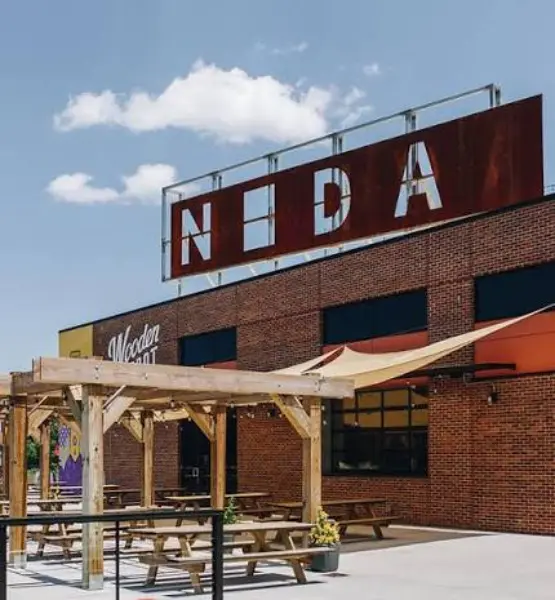
North Davidson Street is NoDa's commercial and cultural spine, lined with galleries, breweries, and restaurants. Its narrow lanes, angled on-street parking, and heavy pedestrian crossings — especially near 36th Street — create conditions for low-speed collisions and pedestrian-involved crashes, particularly during festivals and weekend evenings.36th Street crosses North Davidson Street at the literal center of the arts district and carries both local traffic and light rail-adjacent pedestrian movement. Matheson Avenue and Parkwood Avenue serve as secondary connectors linking NoDa to Uptown and Belmont, carrying commuter cut-through traffic during peak hours.
North Tryon Street (US-29) along NoDa's eastern boundary is a different environment entirely — a higher-speed commuter corridor carrying traffic toward University City. Where North Tryon meets Sugar Creek Road, named specifically in Charlotte's Vision Zero materials, commercial access points and higher speeds combine to create one of the more serious crash zones near the neighborhood.
Major roads and corridors in NoDa
North Davidson Street — NoDa's arts-district spine with galleries, breweries, and heavy pedestrian crossings, especially during festivals and gallery crawls.36th Street — Crosses North Davidson at the heart of the district; mixes local vehicle traffic with light rail-adjacent pedestrian activity.
Matheson Avenue — Secondary connector to Uptown and Belmont carrying commuter cut-through traffic.
Parkwood Avenue — Connector road linking NoDa to surrounding neighborhoods with growing residential traffic.
North Tryon Street (US-29) — Higher-speed commuter corridor forming NoDa's eastern edge, named in Charlotte Vision Zero enforcement materials.
Sugar Creek Road — Intersects North Tryon Street near NoDa's boundary; a Vision Zero enforcement-area corridor with commercial access and elevated speeds.
Dangerous intersections and congestion zones in NoDa
North Davidson Street at 36th Street — The literal heart of NoDa; heavy pedestrian, cyclist, and vehicle mixing during festivals and weekend nightlife.
North Tryon Street at Sugar Creek Road — Named in Charlotte Vision Zero enforcement materials; higher speeds and commercial access create serious-crash risk.
North Davidson Street at Matheson Avenue — Light rail-adjacent crossing with mixed local and commuter traffic.
Parkwood Avenue at North Davidson Street — Growing residential and commercial traffic conflict point.
North Tryon Street at the NoDa/University City boundary — Transition zone where commuter volume increases heading toward UNC Charlotte.
What should you do after a car accident in NoDa?
After a NoDa car accident: call 911, get medical care, document the scene, request the crash report from Charlotte-Mecklenburg Police Department (CMPD) or Mecklenburg County Sheriff's Office, and avoid giving detailed insurance statements before you understand how North Carolina's contributory negligence rule affects your claim.
1. Call 911. Charlotte-Mecklenburg Police Department (CMPD) handles crash response inside city limits. Mecklenburg County Sheriff's Office responds in unincorporated Mecklenburg areas. North Carolina Highway Patrol (NCHP) responds on state highways and interstates.
2. Seek medical care. Novant Health Presbyterian Medical Center on Hawthorne Lane, the closest full-service emergency department to NoDa is the primary acute-care facility for the area. For serious trauma requiring a Level I resource, Atrium Health Carolinas Medical Center (Level I trauma center) and Levine Children's Hospital (Level I pediatric trauma center) serves as the regional trauma center.
3. Document the scene. Photograph vehicle damage, road conditions, traffic signals, skid marks, and injuries. Business cameras and NCDOT cameras along North Tryon Street (US-29) and North Davidson Street may have recorded the crash.
4. Collect witness and insurance information. Get names and phone numbers. Do not discuss fault at the scene.
5. Request the crash report. Charlotte-Mecklenburg Police Department (CMPD) crash reports can be requested through the department's records division. For state highway crashes investigated by North Carolina Highway Patrol (NCHP), NCDOT's online crash report portal provides access.
6. Be careful with insurance calls. North Carolina's contributory negligence rule means early fault statements can damage your claim.
7. Speak with a lawyer before settling. Your settlement should account for all medical costs, lost income, and the long-term impact of your injuries.
Talk to a NoDa car accident lawyer today
If you were injured in a NoDa car accident, we can help you understand how North Carolina law applies to your claim, what your case may be worth, and how to protect your rights through the insurance process.
Frequently asked questions
What should I do immediately after a car accident in NoDa?
Call 911, get medical care, photograph the scene, collect witness information, and request the crash report from Charlotte-Mecklenburg Police Department (CMPD) or North Carolina Highway Patrol (NCHP). Be careful with early statements to insurance companies — your words about fault matter under North Carolina law.
Which roads in NoDa have the highest crash risk?
The roads that create the most risk in NoDa include North Davidson Street, 36th Street, Matheson Avenue, Parkwood Avenue, North Tryon Street, and Sugar Creek Road along the neighborhood's edges.
How do I get a crash report after a NoDa accident?
Charlotte-Mecklenburg Police Department (CMPD) crash reports can be requested through the department's records division. For crashes on state highways investigated by North Carolina Highway Patrol (NCHP), reports are available through NCDOT's online crash report portal or through North Carolina Highway Patrol (NCHP) records. Allow a few days after the crash before requesting.
Where should I go for emergency medical care after a serious NoDa crash?
Novant Health Presbyterian Medical Center on Hawthorne Lane, the closest full-service emergency department to NoDa provides emergency and acute care for crash victims in the NoDa area. For the most serious trauma requiring Level I or II resources, Atrium Health Carolinas Medical Center (Level I trauma center) and Levine Children's Hospital (Level I pediatric trauma center) is accessible for critical cases.
How does North Carolina's contributory negligence rule affect my NoDa car accident claim?
North Carolina follows contributory negligence, meaning an injured person may be barred from any recovery if found even slightly at fault for the crash. This rule — followed in only a handful of states — makes how fault is handled from the very beginning of a NoDa car accident case critically important. Insurance companies are aware of this rule and may use early statements to argue the injured person contributed to the crash.