Concord's crash risk reflects its position as the fastest-growing city in Cabarrus County, with US-29, NC-73, and Concord Mills Boulevard carrying heavy traffic through commercial and residential corridors that mix trucks, commuters, and shoppers.
NCDOT crash data identifies US-29 (Concord Parkway) and the Concord Mills Boulevard corridor as among the highest-volume and highest-risk roadways in Cabarrus County for vehicle collisions.
Cabarrus County's traffic growth has been driven partly by Concord Mills Mall, which generates significant visitor and commercial traffic on surrounding roads and creates elevated crash risk at high-volume intersections along Concord Mills Boulevard and Rocky River Road.
The Cabarrus County Sheriff's Office and Concord Police Department handle crash response and investigation across Concord, with NCDOT providing crash data mapping for the county's most active corridors.
Atrium Health Cabarrus in Concord is the primary acute-care hospital serving Cabarrus County crash victims, providing emergency and surgical services for serious injuries before transfer to a Level I trauma center in Charlotte if needed.

Car accidents are a serious issue in Concord because the city sits at a regional crossroads where US-29, I-85, NC-73, and Concord Mills Boulevard all carry heavy traffic, and because Cabarrus County's population growth has increased crash volume on roads not built for current traffic levels.
Concord has grown rapidly and now anchors Cabarrus County's economy and population base. The city's road network handles commuter traffic heading south toward Charlotte, shopping traffic generated by Concord Mills Mall, freight movement on US-29 and I-85, and local trips across an expanding suburban street grid.
The Concord Mills Boulevard corridor is one of the busiest commercial strips in the greater Charlotte metro. High traffic volumes, frequent driveway access, turning movements, and pedestrian activity near the mall create crash conditions that differ from highway driving but still produce serious collisions.
US-29 / Concord Parkway carries additional risk as a high-speed corridor with commercial access and heavy vehicle mixing.\n\nFor an injured person in Concord, the investigation should account for which road the crash occurred on, what the traffic conditions were at that corridor, and what evidence business cameras, intersection cameras, witness information may be available to support the claim.
Which roads and traffic conditions create the most risk in Concord?
The roads that create the most risk in Concord include US-29 / Concord Parkway, Concord Mills Boulevard, NC-73 / Davidson Highway, Rocky River Road, Poplar Tent Road, and the I-85 / US-29 interchange area near Kannapolis. High traffic volume, commercial access points, and commuter mixing are the primary risk factors.
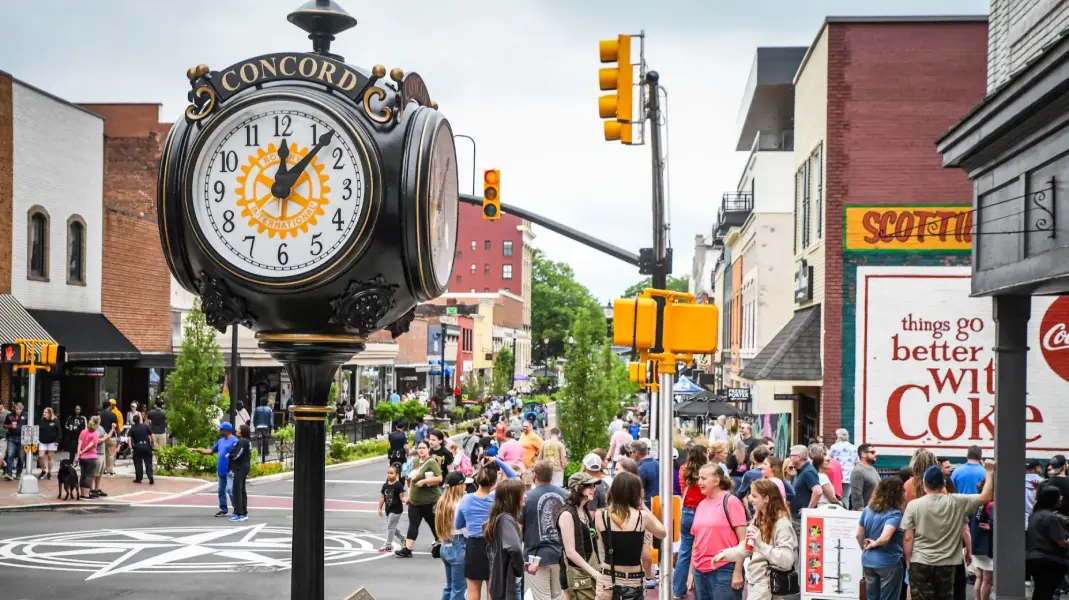
Concord's road risk is concentrated along its commercial and commuter corridors. US-29 / Concord Parkway runs north-south through the city and carries a combination of local commercial traffic, through-county commuters, and freight movement. The road's signalized intersections and business access points create frequent stop-and-go conditions where rear-end and turning collisions occur.
Concord Mills Boulevard and the surrounding retail corridor near the mall generates one of the highest pedestrian and vehicle interaction volumes in Cabarrus County. Shoppers, delivery vehicles, and commuters share road space with frequent turning movements and parking lot access.
NC-73 / Davidson Highway connects Concord to communities to the west and carries commuter traffic that has grown with Lake Norman-area residential development.\n\nRocky River Road and Poplar Tent Road serve as secondary connectors in Concord's growing suburban quadrants. As residential development pushes north and east of the city center, these roads have absorbed commuter volume without proportional infrastructure upgrades, increasing crash exposure for drivers in neighborhoods that are relatively new to high traffic.
Major roads and corridors in Concord
US-29 / Concord Parkway — Primary north-south commercial and commuter corridor through Concord. Signalized intersections and business access create stop-and-go crash conditions.
Concord Mills Boulevard — High-volume retail corridor near Concord Mills Mall. Frequent turning movements, pedestrian activity, and parking access create complex crash conditions.
NC-73 / Davidson Highway — West Concord connector to Lake Norman area communities. Carries commuter traffic that has grown with residential development west of the city.
Rocky River Road — Secondary connector in north and east Concord. Growing residential traffic and limited road upgrades have increased crash exposure.\
Poplar Tent Road — Secondary north Concord corridor carrying residential and commuter traffic to US-29 and I-85 interchanges.
I-85 — The I-85 / US-29 interchange area near Kannapolis creates high-speed merging conditions and has been the site of serious crashes involving both passenger vehicles and commercial trucks.
Dangerous intersections and congestion zones in Concord
The Concord Mills Boulevard and US-29 interchange area is one of the highest-volume and most complex traffic zones in Cabarrus County. The concentration of retail traffic, commuter through-movement, and highway access creates crash conditions that include rear-end collisions, turning conflicts, and pedestrian-vehicle interactions.
The intersection of US-29 and NC-73 / Davidson Highway is a major east-west and north-south traffic crossing point in Concord. Traffic volumes from both directions and turning movement conflicts have made this intersection a notable crash location.
Rocky River Road at Concord Mills Boulevard generates significant turning and access-point conflicts as shoppers and residential traffic converge near the mall's secondary entrances.
Poplar Tent Road at US-29 is a high-volume interchange area where residential commuters entering the US-29 corridor create merging conflicts during peak travel periods.
The I-85 / US-29 Concord-Kannapolis area represents a high-speed merge and weave zone where crashes involving commercial trucks are documented in NCDOT data.
Local Resources for Accident Victims in Concord
What should you do after a car accident in Concord?
After a Concord car accident: call 911, get medical care, document the scene, request the crash report from Concord Police or the Cabarrus County Sheriff, and avoid giving detailed insurance statements before understanding how North Carolina's contributory negligence rule affects your claim.
1. Call 911. Concord Police Department handles crash response inside city limits. For crashes outside city limits in Cabarrus County, the Cabarrus County Sheriff's Office may respond. On interstates and state highways, NCHP may also respond.
2. Seek medical care. Atrium Health Cabarrus in Concord is the primary acute care hospital for Cabarrus County crash victims. For serious trauma, Atrium Health Carolinas Medical Center in Charlotte is the region's adult Level I trauma center.
3. Document the scene. Photograph vehicle damage, road conditions, traffic signals, skid marks, and injuries. Near Concord Mills and the US-29 corridor, business cameras and intersection cameras may have captured the crash.
4. Collect witness and insurance information. Get names and phone numbers. Do not discuss fault at the scene.
5. Request the crash report. Concord Police Department crash reports can be requested through the CPD Records Division. NCDOT's online crash report portal provides access to reports for crashes on state-maintained roads.
6. Be careful with insurance calls. North Carolina's contributory negligence rule means early fault statements can damage your claim.
7. Speak with a lawyer before settling. Your settlement should account for all medical costs, lost income, and the long-term impact of your injuries.
Talk to a Concord car accident lawyer today
If you were injured in a Concord car accident, we can help you understand how North Carolina law applies to your claim, what your case may be worth, and how to protect your rights through the insurance process.
Frequently asked questions
What should I do immediately after a car accident in Concord?
Call 911, get medical care, document the scene with photos, collect witness information, and request the crash report from Concord Police or the Cabarrus County Sheriff. Avoid giving detailed insurance statements before understanding how North Carolina's contributory negligence rule applies.
Which roads in Concord have the highest crash risk?
Major risk corridors include US-29 / Concord Parkway, Concord Mills Boulevard, NC-73 / Davidson Highway, Rocky River Road, and the I-85 / US-29 interchange area. The Concord Mills corridor and US-29 commercial strip carry some of the highest traffic volumes and crash frequencies in Cabarrus County.
How do I get a crash report after a Concord accident?
Concord Police crash reports can be requested through CPD Records. For Cabarrus County Sheriff crashes, contact the Sheriff's records division. For crashes on I-85 or state highways investigated by NCHP, NCDOT's online crash report portal provides access.
Where should I go for emergency medical care after a serious Concord crash?
Atrium Health Cabarrus in Concord provides emergency and acute care for Cabarrus County crash victims. For the most serious trauma, Atrium Health Carolinas Medical Center in Charlotte is the region's adult Level I trauma center.
How does North Carolina's contributory negligence rule affect my Concord car accident claim?
North Carolina's contributory negligence rule means that if you are found even slightly at fault for a crash — even 1% — you may be barred from recovering anything. This is one of the strictest fault standards in the country and makes how fault is discussed and documented after a Concord accident critically important. Insurance adjusters are trained to look for any statement that can be used to assign partial fault.