
Clinton is a Laurens County city positioned at the intersection of I-26 and US-76, where interstate traffic meets a regional highway network serving the Piedmont textile corridor — creating crash risk from both high-speed interstate travel and urban arterial conflicts.
I-26 runs along the northern edge of Clinton and carries substantial freight and passenger vehicle traffic between Columbia and the Upstate, with the Clinton-area interchanges at Exits 52 and 54 generating merging and deceleration conflicts from through-traffic transitioning to local roads.
US-76 (Carolina Avenue / Musgrove Street) serves as Clinton's primary urban arterial, carrying commuter, commercial, and student traffic through the town center where signalized and unsignalized intersections, commercial driveways, and pedestrian activity create angle and rear-end crash conditions.
Presbyterian College and Clinton's growing commercial base generate significant pedestrian-vehicle and bicycle-vehicle conflict along US-76 and SC-72, particularly during academic-year peak periods when student foot traffic intersects with arterial vehicle flow.
Laurens County's rural secondary roads connecting Clinton to surrounding communities carry agricultural and commuter traffic on two-lane alignments where passing-zone violations and driveway conflicts produce crash risk with limited enforcement coverage.
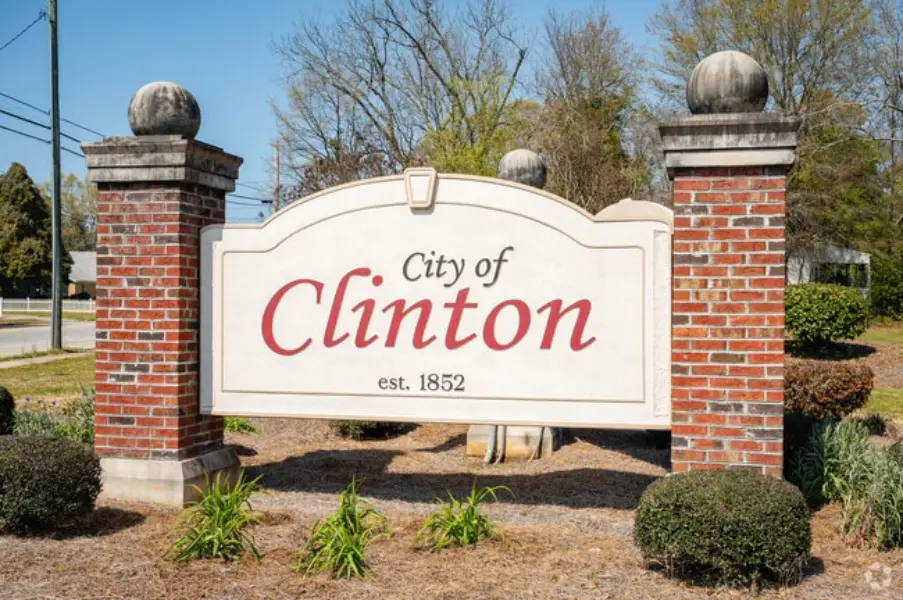
Clinton is a Laurens County city where I-26 interchange traffic, US-76 urban arterial conflicts, and rural county road crash patterns combine — a mix of high-speed interstate merging risk, urban intersection crashes, and two-lane rural highway incidents that reflects the city's position at the heart of Laurens County's road network.
Clinton serves as the seat of Laurens County and functions as the region's primary commercial and institutional center. Its position at the I-26 and US-76 corridor places it at a critical junction between interstate freight and passenger traffic and the local road network serving Laurens, Greenwood, and Newberry counties. I-26 passes just north of the city with two interchange exits in the Clinton area; the deceleration and merging patterns at these interchanges concentrate rear-end and lane-change crashes, particularly from trucks transitioning from interstate speed to local arterials.
US-76 through Clinton's downtown and commercial corridor is the city's highest-volume surface street, where commercial driveways, signalized intersections, and Presbyterian College traffic create a continuous source of angle, rear-end, and turning conflicts. SC-72 provides a parallel corridor west toward Greenwood, carrying commuter and commercial traffic on an arterial with driveway conflicts and intersection crash exposure.
Clinton Police Department covers the city; Laurens County Sheriff's Office handles surrounding rural areas; SCHP covers I-26 and state highways. Prisma Health Laurens County Memorial Hospital provides local acute care, with Prisma Health Greenville Memorial serving as the Level I trauma resource for the most serious cases.
Which roads and traffic conditions create the most risk in Clinton?
I-26 interchanges at Exits 52 and 54, US-76 through the Clinton commercial corridor, and SC-72 west toward Greenwood carry the highest crash concentration in Clinton — driven by interstate merging conflicts, urban arterial intersection crashes, and commercial driveway conflicts along the main business corridor.
I-26 generates the most severe Clinton-area crashes, particularly at the Exit 52 (US-56 / Musgrove Street) and Exit 54 (US-76 / Clinton) interchanges, where drivers decelerating from 70 mph to local speeds create rear-end crash scenarios and where merging from ramps onto US-76 and US-56 creates gap-acceptance conflicts.
Commercial truck traffic is heavy on I-26 through this corridor, and truck-involved crashes are disproportionately severe. US-76 (Carolina Avenue) through the Clinton commercial and institutional corridor is the city's highest surface-road crash location, with signalized intersections at Carolina Avenue and Musgrove Street, driveway conflicts from commercial development, and Presbyterian College pedestrian traffic all contributing.
SC-72 west of Clinton toward Joanna and Greenwood carries commuter and commercial traffic on a rural two-lane alignment with limited passing opportunities and uncontrolled intersections at rural junctions.
US-56 (Musgrove Street) connecting I-26 to downtown Clinton funnels interchange traffic through an urban arterial with pedestrian crossings, signalized intersections, and commercial driveway conflicts.
Major roads and corridors in Clinton
I-26 — The primary interstate corridor through northern Clinton; Exit 52 (US-56) and Exit 54 (US-76) generate merging and deceleration rear-end crashes as drivers transition from interstate speed to local arterials.
US-76 (Carolina Avenue) — Clinton's main commercial arterial; signalized intersections, commercial driveways, and Presbyterian College pedestrian traffic create angle, rear-end, and turning crash conditions through the downtown and commercial corridor.
US-56 (Musgrove Street) — Primary connector from I-26 to Clinton's city center; interchange ramp traffic merging with local traffic and urban intersection conflicts produce rear-end and angle crashes.
SC-72 (Whitmire Highway) — West connector from Clinton toward Joanna, Newberry, and Greenwood; rural two-lane sections with limited passing zones and uncontrolled rural junctions create passing conflict and angle crash risk.
SC-56 (Thornton Avenue) — South Clinton connector toward Joanna and Union; rural two-lane character with residential driveway and intersection conflicts on its outskirts sections.
Dangerous intersections and congestion zones in Clinton
US-76 at US-56 (Carolina Avenue at Musgrove Street) — Clinton's central arterial junction and highest crash-density urban intersection; turning conflicts, signal phasing gaps, and commercial driveway proximity concentrate angle and rear-end crashes here.
I-26 Exit 52 ramps at US-56 — The interchange ramp terminals where decelerating interstate traffic merges with local US-56 traffic; rear-end and gap-acceptance crashes are most frequent during peak travel periods and from commercial truck deceleration.
I-26 Exit 54 ramps at US-76 — The US-76 interchange where interstate traffic exits to Clinton's main commercial corridor; merging and turning conflicts at the ramp terminals create crash exposure, particularly for northbound vehicles crossing
US-76 from the off-ramp. US-76 at SC-72 (Carolina Avenue at Whitmire Highway) — West Clinton junction where the Greenwood-bound SC-72 splits from US-76; turning movement conflicts and signal-coordination issues generate angle and rear-end crashes at peak periods.
Local Resources for Accident Victims in Clinton
What should you do after a car accident in Clinton?
After a Clinton car accident: call 911, get medical care, document the scene, request the crash report from Clinton Police Department or Laurens County Sheriff's Office, and avoid giving detailed insurance statements before speaking with an attorney about how South Carolina's comparative fault rules affect your claim.
1. Call 911. Clinton Police Department handles crash response inside city limits. Laurens County Sheriff's Office responds in unincorporated Laurens areas. South Carolina Highway Patrol (SCHP) responds on state highways and interstates.
2. Seek medical care. Prisma Health Laurens County Memorial Hospital is the primary acute-care facility for the area. For serious trauma, Prisma Health Greenville Memorial Hospital (Level I) provides higher-level emergency resources.
3. Document the scene. Photograph vehicle damage, road conditions, traffic signals, skid marks, and injuries. SCDOT and commercial cameras along I-26 and US-76 may have recorded the crash.
4. Collect witness and insurance information. Get names and phone numbers. Do not discuss fault at the scene.
5. Request the crash report. Clinton Police Department crash reports can be requested through the department's records division. South Carolina Highway Patrol (SCHP) reports are available through their records division or SCDOT's online portal.
6. Be careful with insurance calls. Even under South Carolina's comparative fault system, early statements can be used to increase your assigned fault percentage and reduce your recovery.
7. Speak with a lawyer before settling. Your settlement should account for all medical costs, future treatment, lost income, and the long-term impact of your injuries.
Talk to a Clinton car accident lawyer today
If you were injured in a Clinton car accident, we can help you understand how South Carolina law applies to your claim, what your case may be worth, and how to protect your rights through the insurance process.
Frequently asked questions
What should I do immediately after a car accident in Clinton?
Call 911, get medical care, photograph the scene, collect witness information, and request the crash report from Clinton Police Department or South Carolina Highway Patrol (SCHP). Be careful with early statements to insurance companies — your words about fault matter under South Carolina law.
Which roads in Clinton have the highest crash risk?
I-26 interchanges at Exits 52 and 54, US-76 through the Clinton commercial corridor, and SC-72 west toward Greenwood carry the highest crash concentration in Clinton — driven by interstate merging conflicts, urban arterial intersection crashes, and commercial driveway conflicts along the main business corridor.
How do I get a crash report after a Clinton accident?
Clinton Police Department crash reports can be requested through the department's records division. For crashes on state highways investigated by South Carolina Highway Patrol (SCHP), reports are available through SCDOT's online crash report portal or through South Carolina Highway Patrol (SCHP) records. Allow a few days after the crash before requesting.
Where should I go for emergency medical care after a serious Clinton crash?
Prisma Health Laurens County Memorial Hospital provides emergency and acute care for crash victims in the Clinton area. For the most serious trauma requiring Level I resources, Prisma Health Greenville Memorial Hospital (Level I) is accessible for critical cases.
How does South Carolina's fault system affect my Clinton car accident claim?
South Carolina follows a modified comparative fault system under SC Code Ann. § 15-38-15. Unlike the contributory negligence rule used in a small number of states — where being even slightly at fault can bar all recovery — South Carolina allows injured people to recover as long as they are 51% or less responsible for the crash. Your recovery is reduced proportionally by your percentage of fault. This means handling fault carefully still matters in a Clinton accident case — reducing your assigned fault percentage directly increases your potential recovery.