
Triangle North Carolina Personal Injury Lawyers
Serving Raleigh, Durham, Chapel Hill, Cary, Apex, and surrounding communities across the Triangle region.
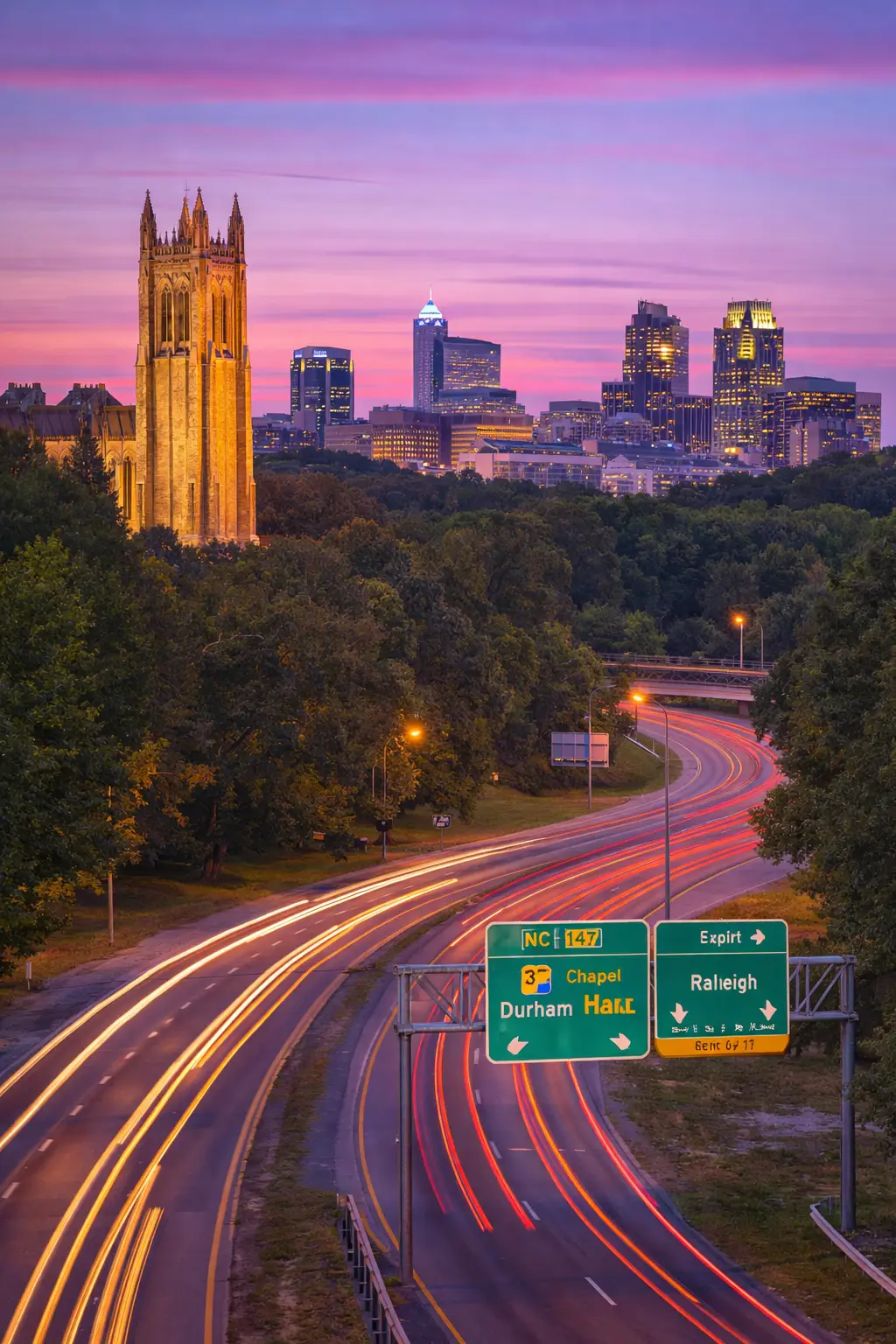
The Triangle region of North Carolina, centered around Raleigh, Durham, and Chapel Hill, is one of the fastest-growing and most heavily traveled areas in the state. Rapid population growth, expanding suburban communities, and major employment centers have significantly increased daily traffic across the region. Key corridors such as Interstate 40, Interstate 540, U.S. Route 1, and NC 147 carry a constant mix of commuter traffic, commercial vehicles, and regional travel. These conditions contribute to a high volume of collisions, including congested commuter crashes, high-speed interstate accidents, and multi-vehicle collisions across major connectors. In 2024, Wake County alone reported 33,284 crashes, while Durham County reported over 10,000 crashes, illustrating the scale of accident activity across the Triangle. Biazzo Injury Law is proud to represent accident victims throughout the Triangle region of North Carolina and help them pursue the compensation they deserve.
Regional Accident Profile
Largest Counties in Region
Wake County
Wake County, which includes Raleigh and many surrounding suburbs, reported 33,284 total crashes in 2024, including 7,818 non-fatal injury crashes. The county also recorded hundreds of pedestrian, bicycle, and motorcycle crashes, reflecting a dense and diverse traffic environment that includes both urban and suburban travel patterns.
Wake County recorded 87 fatal crashes in 2024, with many occurring along major interstate corridors and high-volume arterial roads. The combination of congestion and speed contributes significantly to crash severity in the region.
Durham County
Durham County reported over 10,000 total crashes in 2024, including thousands of injury-related collisions. The county’s crash activity is influenced by commuter traffic, university-related travel, and its role as a connector between Raleigh and other parts of the region.
Durham County recorded 33 fatal crashes in 2024, with many incidents occurring on major roadways such as NC 147 and Interstate 85, where high-speed travel and merging traffic increase the risk of severe outcomes.
What Are the Most Dangerous Roads in the Region?
Interstate 40 (I-40)
Interstate 40 is one of the most heavily traveled corridors in the Triangle and serves as the primary east-west connection between Raleigh, Durham, and Chapel Hill. The roadway carries a mix of commuter traffic, commercial vehicles, and regional travel, resulting in frequent congestion and heavy merging activity. Drivers often encounter sudden changes in traffic speed, particularly during peak hours, increasing the likelihood of rear-end collisions and multi-vehicle accidents. The high volume of vehicles combined with sustained travel speeds makes I-40 a significant contributor to serious crash activity in the region.
Interstate 540 (I-540)
Interstate 540 functions as an outer loop around Raleigh and serves as a key connector for suburban communities throughout the Triangle. As the region continues to grow, I-540 has become increasingly busy, with drivers traveling at higher speeds between residential areas and employment centers. The roadway’s design encourages faster travel, but frequent entrances and exits create conditions where lane changes and merging traffic increase the risk of collisions. These factors make I-540 an important contributor to both crash frequency and severity in the Triangle.
U.S. Route 1 (US-1)
U.S. Route 1 is a major north-south corridor that connects Raleigh with surrounding communities and serves as an alternative to interstate travel. Unlike fully controlled-access highways, US-1 includes intersections, traffic signals, and varying speed zones, creating a more complex driving environment. Drivers must navigate a mix of local traffic, commuter travel, and regional movement, increasing the likelihood of rear-end collisions, side-impact crashes, and intersection-related accidents.
Explore the cities we serve across the Triangle region:


