
What to Do After a Slip and Fall Accident in Florida
Hurt in a fall on someone else's property in Florida? Learn the steps to take right away, how Florida's slip and fall law works, and how to protect your right to compensation.
What to Do After a Slip and Fall Accident in Florida
The steps that protect your health and your claim after a fall on someone else's property
One second you are walking through a grocery store, a hotel lobby, or an apartment walkway. The next, you are on the ground, hurting, and maybe a little embarrassed. Many people brush themselves off, say "I'm fine," and leave. That reaction is understandable, but it can make it much harder to recover compensation later if your injuries turn out to be serious.
Florida's year-round rain, pool decks, tile floors, and busy retail and tourist spaces mean slip and fall accidents happen every day. Florida law also has specific rules for these cases, including a statute that requires people who slip on a spilled substance in a business to prove the business knew or should have known about the hazard.
This guide explains exactly what to do after a slip and fall in Florida, what the law requires, and how to avoid the mistakes that weaken valid claims.
The Short Answer: What to Do Right After a Fall
If you slipped and fell on someone else's property in Florida, the most important steps are:
- Get medical care, even if you think the injury is minor.
- Report the fall to the manager, owner, or landlord and ask for a copy of the incident report.
- Photograph the hazard and the area before it is cleaned up or fixed.
- Collect witness names and contact information.
- Keep your shoes and clothing exactly as they were.
- Don't give a recorded statement or sign anything for the property owner's insurer before getting advice.
- Act quickly. Most Florida negligence claims arising after March 24, 2023 must be filed within two years.
Florida slip and fall cases often turn on proof that the owner knew, or should have known, about the dangerous condition. The evidence you gather in the first hours and days can decide whether that proof exists.
Step 1: Get Medical Attention Right Away
Your health comes first. Falls commonly cause head injuries, wrist and hip fractures, back and neck injuries, and torn ligaments. Some of these, especially concussions and soft-tissue injuries, may not cause obvious symptoms until hours or days later.
Seeing a doctor promptly also creates a medical record that connects your injury to the fall. Insurance companies often argue that a gap between the accident and treatment means the injury was minor or came from something else. Follow your doctor's treatment plan and keep every appointment.
Step 2: Report the Fall and Get an Incident Report
Tell the store manager, property manager, landlord, or homeowner what happened before you leave, if you are physically able. Businesses usually have a procedure for documenting injuries on their premises.
- Ask for a copy of the written incident report. If they won't give you one, write down the name of the person who took your report.
- Stick to the facts. Describe what you saw and where you fell.
- Avoid guessing, apologizing, or saying things like "I wasn't paying attention." Those comments can be used to shift blame onto you.
Step 3: Document the Scene Before It Changes
Spills get mopped up, broken steps get repaired, and lighting gets fixed, sometimes within minutes. Photos and video taken right away can be the most valuable evidence in your case.
- Photograph the exact hazard: the liquid, debris, uneven surface, torn mat, or broken stair.
- Capture the surrounding area, including whether any warning sign or cone was present.
- Note anything showing how long the hazard was there, such as footprints or cart tracks through a spill, dried edges, or dirt in a puddle.
- Look for security cameras and note where they are. Footage is often recorded over quickly, so an attorney may need to send a preservation request promptly.
- Photograph your visible injuries and the shoes you were wearing.
Step 4: Gather Witness Information and Preserve Evidence
Customers, employees, and bystanders may have seen the fall or the hazard beforehand. A witness who can say "that spill had been there for a while" or "I told an employee about it earlier" can be critical.
Get names and phone numbers before people leave. Then keep the shoes and clothing you were wearing in a bag, unwashed. Defense lawyers often argue that footwear caused the fall, and having the actual shoes available helps answer that argument.
If you were injured in a slip and fall in Florida, Biazzo Injury Law can help. Contact us for a free consultation. You pay nothing unless we win.
Step 5: Be Careful With Insurance Adjusters
Soon after a fall, you may get a call from the property owner's insurance company. The adjuster may sound friendly and may ask for a recorded statement or offer a quick payment. Remember that the adjuster's job is to limit what the insurer pays.
- You generally do not have to give a recorded statement to the other side's insurer.
- Don't sign medical authorizations or releases without understanding what they cover.
- Don't accept an early settlement before you know the full extent of your injuries. Once you sign a release, you usually cannot reopen the claim.
Also be careful on social media. Photos or posts about your activities can be taken out of context and used to argue you are not really hurt.
Florida Slip and Fall Law: What You Need to Know
Several Florida-specific rules shape every slip and fall claim in the state.
Proving the business knew about the hazard. Under Section 768.0755, Florida Statutes, a person who slips and falls on a "transitory foreign substance" (such as a spilled drink, water, or food) in a business establishment must prove the business had actual or constructive knowledge of the dangerous condition and should have taken action to fix it. Constructive knowledge can be shown with circumstantial evidence that:
- the condition existed long enough that the business should have discovered it with ordinary care, or
- the condition happened regularly, so it was foreseeable.
This is why evidence about how long a spill was present, prior complaints, and inspection or cleaning logs matter so much in Florida cases.
Modified comparative negligence. Florida uses a modified comparative fault system under Section 768.81. If you are found partly at fault, your compensation is reduced by your percentage of fault. But if you are found more than 50% at fault, you generally cannot recover damages at all. Property owners and insurers frequently argue the injured person was distracted, wearing the wrong shoes, or should have seen the hazard, so pushing back on inflated fault arguments is a key part of these cases.
Falls on government property. If you fell on a public sidewalk, in a government building, or on other public property, special notice requirements and different deadlines apply under Florida's sovereign immunity law. These claims have procedural steps that must be followed carefully, so talk to a lawyer early.
How Long Do You Have to File a Slip and Fall Claim in Florida?
Florida's 2023 tort reform law (HB 837) shortened the statute of limitations for most negligence claims from four years to two years under Section 95.11, Florida Statutes. The two-year deadline applies to negligence claims that arose after March 24, 2023. Claims against government entities follow different rules.
Two years can pass quickly while you are focused on recovering. If you miss the deadline, you may lose your right to compensation entirely. Evidence such as surveillance video can also disappear long before the deadline, which is another reason not to wait.
When Should You Speak With a Personal Injury Lawyer?
Not every fall requires legal representation. However, legal guidance may be helpful when:
- You suffered a fracture, head injury, or any injury requiring ongoing treatment
- You missed work or face future medical expenses
- The property owner or insurer is blaming you for the fall
- Surveillance footage or other evidence needs to be preserved quickly
- The fall happened on government property
- An adjuster is pressuring you to give a statement or accept a quick offer
Every case is different, and no lawyer can guarantee a result. But an attorney can investigate, preserve evidence, and deal with the insurance company so you can focus on healing.
Frequently Asked Questions
Can I still recover if I was partly at fault for my fall in Florida?
Possibly. Florida uses modified comparative negligence. If you were partly at fault, your recovery is reduced by your percentage of fault. If you are found more than 50% at fault, you generally cannot recover. Fault percentages are often disputed, so the evidence you gather matters.
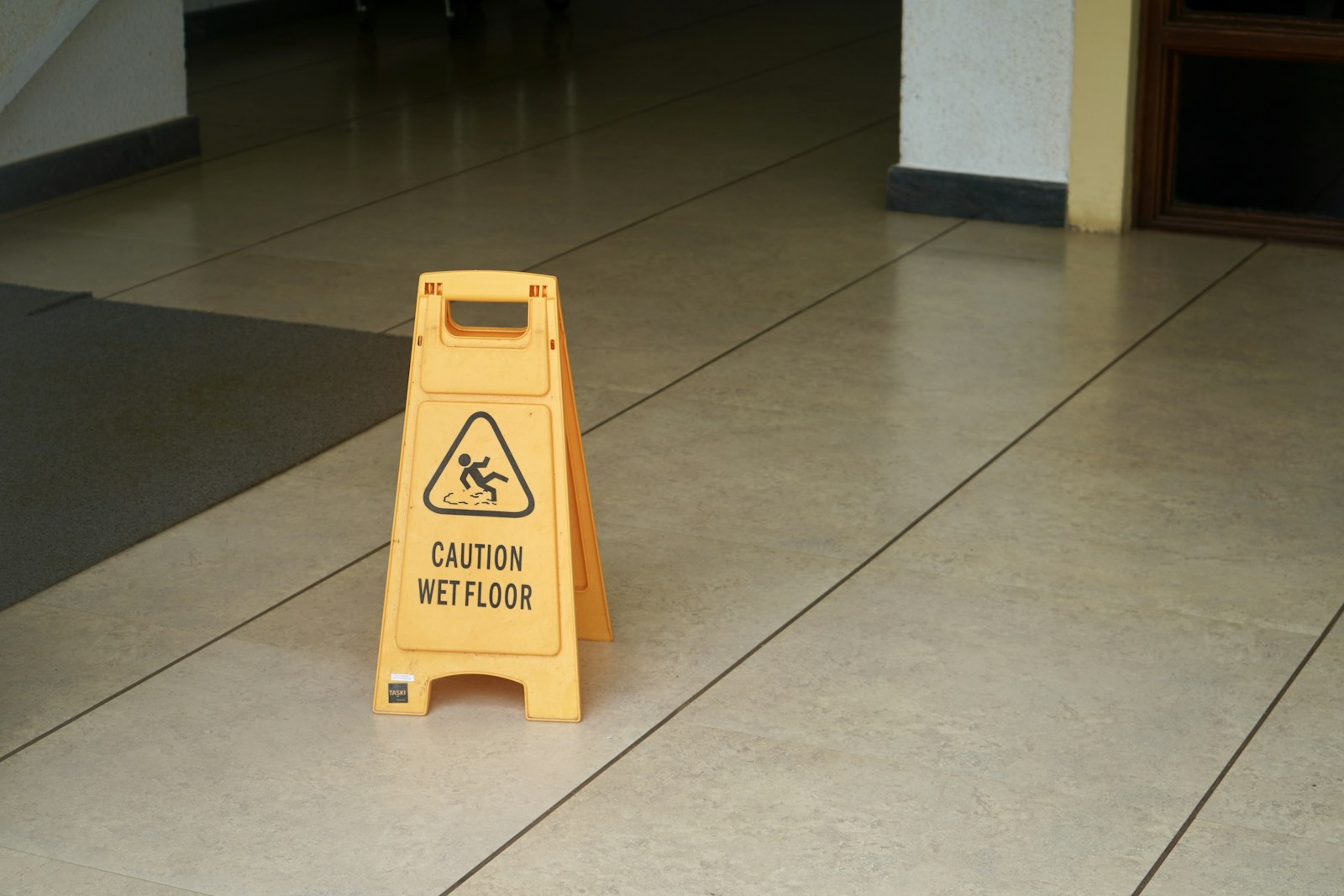
What if there was a wet floor sign?
A warning sign does not automatically end a claim. Questions include whether the sign was visible, placed near the actual hazard, and whether the hazard was reasonably addressed. The specific facts and photos of the scene will matter in deciding whether the owner acted reasonably.
How long do I have to file a slip and fall lawsuit in Florida?
For most negligence claims that arose after March 24, 2023, Florida's statute of limitations is two years. Claims involving government property have separate notice requirements and deadlines. Because evidence can disappear quickly, it is best to speak with a lawyer as soon as possible.
Do I have to prove the store knew about the spill?
Generally, yes. For falls on spilled substances in a business, Section 768.0755 requires proof that the business had actual or constructive knowledge of the condition. Constructive knowledge can be shown by evidence that the hazard existed long enough to be discovered or occurred regularly.
How much does it cost to hire a slip and fall lawyer?
Biazzo Injury Law handles personal injury cases on a contingency fee basis. The consultation is free, and you pay no attorney fee unless we win your case.
Talk With a Florida Slip and Fall Lawyer
A fall can leave you facing medical bills, lost income, and an insurance company that seems more interested in blaming you than helping you. You don't have to sort it out alone. Biazzo Injury Law helps injured people in Florida, and attorneys William Parris and Corey Biazzo can review what happened, explain your options, and act quickly to protect the evidence your claim depends on.
Contact Biazzo Injury Law today for a free, no-obligation consultation. You pay nothing unless we win.


